First Responder Communication During School Lockdown: Closing the Gaps

When a school lockdown ends without casualties, the debrief almost never surfaces a failure in door locks or cameras. It surfaces a failure in communication. Post-incident reviews across districts consistently identify the same breakdown: information stopped flowing between locked-down staff and arriving first responders at the exact moment it was needed most. First responder communication during school lockdown is the most under-documented failure point in K-12 emergency response - and it is the one most likely to determine whether a response succeeds or compounds the crisis.
The Communication Problem No One Talks About After a School Lockdown
Post-incident debriefs consistently rank communication failure - not physical security failure - as the primary breakdown point during school lockdowns. The mechanism is almost always the same: teachers go silent by design (noise discipline is a core lockdown protocol), and that silence creates an information blackout for both administrators and the first responders who arrive minutes later.
A 911 dispatcher typically receives a single initial call. That call captures the trigger event. It does not capture what happens next: which hallway the threat moved to, which rooms are occupied, whether a door failed to lock, whether a student is injured. Officers entering a locked-down building are operating on stale information from the moment they arrive. They must conduct a full sweep of an unfamiliar building because no live feed of floor-level context exists.
This is the school lockdown communication gap that almost no published content addresses directly. Physical security investments - cameras, access control, reinforced doors - create the conditions for a safe response. Communication determines whether that response is actually effective.
Why Communication Breaks Down During School Lockdowns
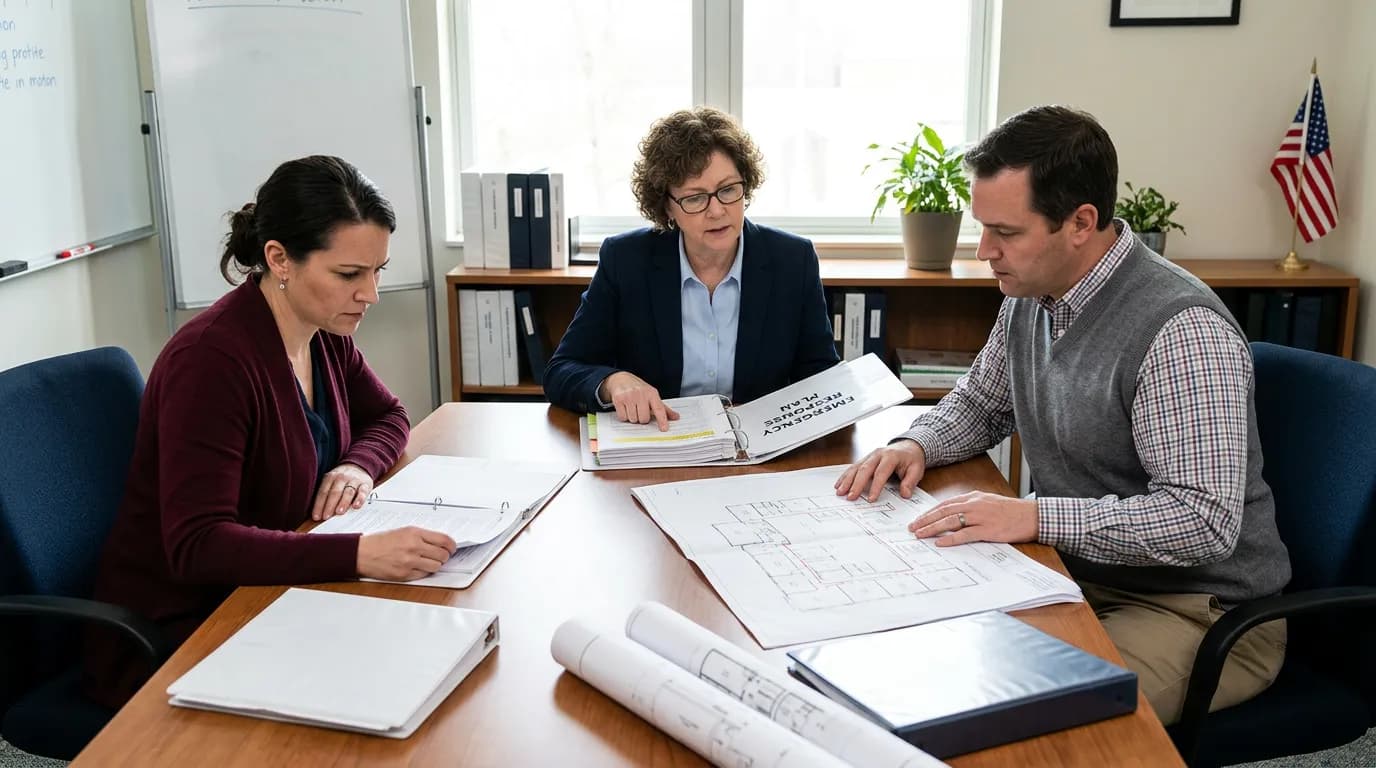
School emergency communication fails for a structural reason: most schools operate three or more disconnected systems during a crisis - intercoms, radios, personal phones, and mass notification tools - and none of them share a common data layer.
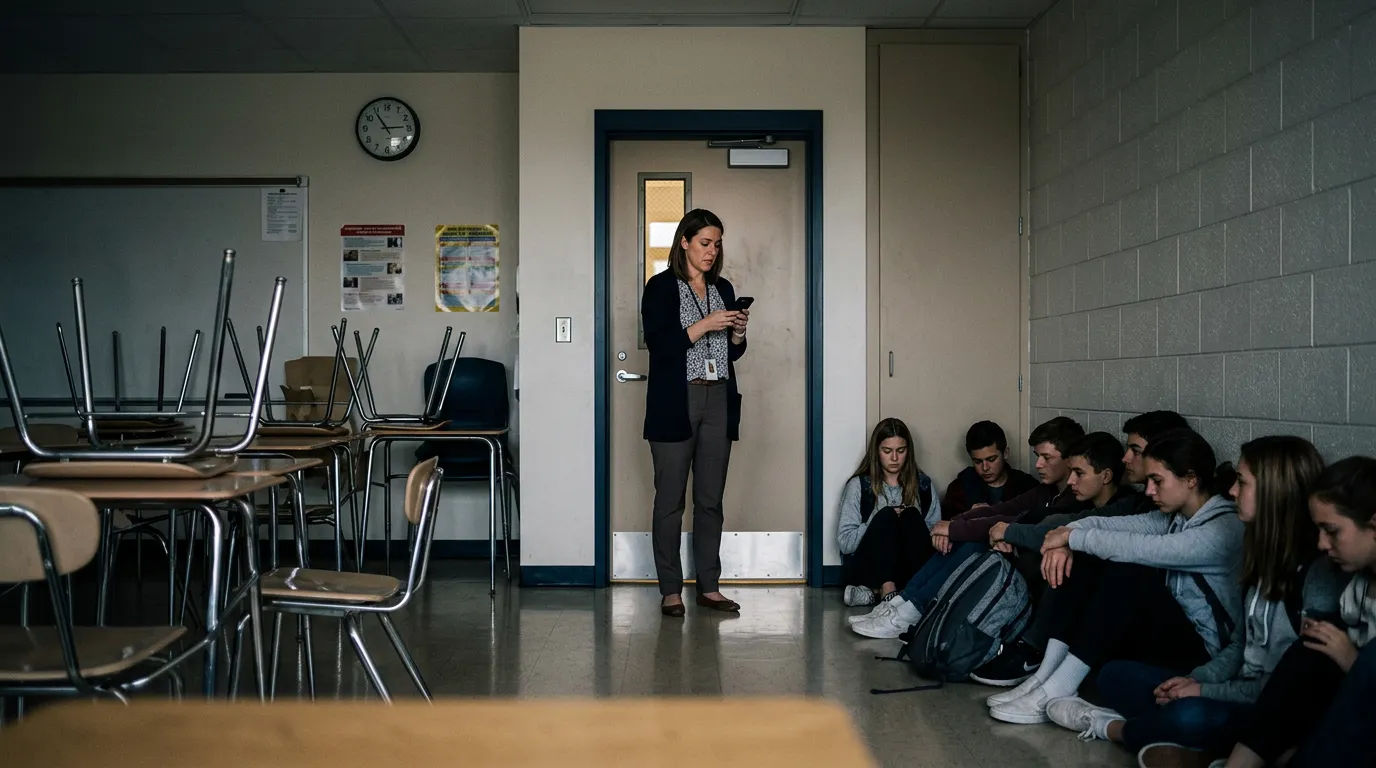
Legacy PA and intercom systems broadcast one-way to all rooms simultaneously. Sending a confidential, targeted message to a single classroom without alerting an intruder to staff locations is not possible on these systems. Teachers following lockdown protocol have no sanctioned channel to report real-time observations - a student injury, a threat sighting, a door that will not lock - without breaking noise discipline.
Administrators lose situational awareness within the first two minutes of a lockdown because staff stop responding to normal communication channels by design. According to Arxys (2024), fragmented tool ecosystems - separate visitor systems, separate alert apps, separate camera dashboards - mean no single person has a unified operational picture when it matters most. The result is not a technology failure. It is a systems architecture failure that was never designed for the conditions of an active threat.
What Information Do First Responders Actually Need When They Arrive at a School Emergency?
First responders need five categories of information on arrival: threat location, number and location of civilians, building layout, active door and lock status, and any staff with direct line-of-sight to the threat. Without pre-loaded building data and real-time staff input, officers must conduct a full sweep of an unfamiliar building - adding critical minutes to response time.
According to Raptor Technologies (2024), schools in crisis cannot afford even one second of delayed or inaccurate communication with 911 dispatchers and first responders. Accuracy and speed are equally critical - a fast call with wrong information is as dangerous as a slow one.
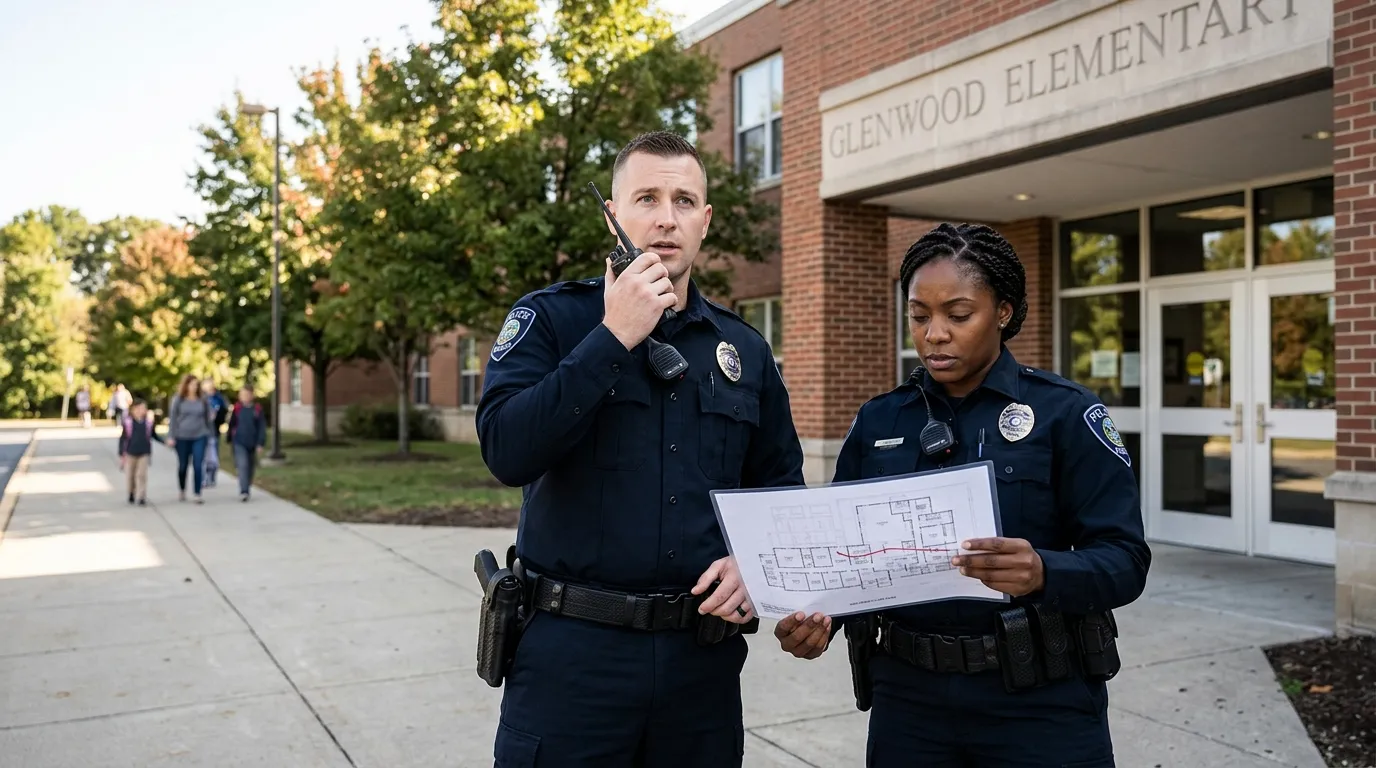
NYC's first-in-nation school-to-911 integration demonstrated what closing this gap looks like in practice. The school-activated system bypasses the standard 911 call flow and pushes structured incident data directly to the dispatcher's screen. According to the NYC Mayor's Office (2025), within seconds of school-side alert activation, the dispatcher puts the call over the air and the dashboard provides emergency responders pertinent information on the school. That is the benchmark: not minutes, not the length of a 911 call queue - seconds.
How Do Teachers Communicate With Administrators and First Responders During an Active Lockdown?
In most schools today, teachers have no dedicated, secure channel to communicate with administrators or first responders once a lockdown is initiated. They are effectively isolated by the protocol designed to protect them.
Cherry Creek School District addressed this directly by implementing QR-code-based secure two-way communication. According to Campus Safety Magazine (2024), the system allows teachers to communicate two-way as first responders move into an incident - reporting imminent problems or observations that need immediate attention - without breaking lockdown protocol.
Denver Public Schools identified two-way communication as the top gap after debriefing critical incidents. According to Denver7 (2024), two-way communication lets people locked in the building give first-hand knowledge of what is going on, making it easier to allocate resources for responding units.
The key design principle is that two-way communication during lockdown is not about volume of messages. It is about giving first responders a live, structured data feed from people who have eyes on the situation - without requiring those people to break silence, switch apps, or make a phone call.
The Three Communication Gaps: A Breakdown of Where Information Dies
Three distinct gaps exist between the moment a threat is detected and the moment first responders have actionable data. Each one compounds the others.
Gap 1 - Teacher to Administrator: Once lockdown is initiated, teachers have no low-noise channel to report real-time observations. Administrators lose floor-level awareness within the first two minutes.
Gap 2 - Administrator to 911 Dispatcher: The initial 911 call captures the trigger event, not the evolving situation. Dispatchers relay static information to responding units who need dynamic data.
Gap 3 - First Responder to Staff Inside the Building: Officers entering the building have no way to query locked-down staff for threat location updates without physically moving through the building.
A teacher who cannot reach an administrator cannot correct the information that reaches the dispatcher. The dispatcher relays incomplete data to officers. Officers act on it anyway because they have no alternative. According to Guard911 (2024), effective two-way communication between every lockdown space, administrators, and law enforcement is no longer optional - it is a baseline requirement for safe response.
What Does a Purpose-Built Two-Way Communication Workflow Look Like in Practice?
A purpose-built workflow integrates alert initiation, staff discussion, dispatch notification, and building data into a single interface - not four separate tools requiring manual handoffs between them.
Staff discussion threads embedded inside the emergency workflow allow any staff member with line-of-sight to the threat to post observations that are immediately visible to the incident commander. Where dispatch integration exists, those updates can flow directly to the dispatcher's screen without a secondary call.
Direct-to-dispatch integrations - such as those using RapidSOS - bypass the 911 call queue and push structured incident data (school name, address, alert type, real-time updates) directly to the dispatcher's screen within seconds of alert activation. Campus maps with live lock status and camera feeds give the incident commander a unified operational picture, reducing the number of radio calls needed to establish situational awareness.
NYC's implementation confirmed the outcome: a school-activated system pushing data directly to dispatch can have a dispatcher broadcasting to responding units within seconds of the school-side trigger (NYC Mayor's Office, 2025). The standard 911 call flow, by comparison, consumes minutes that do not exist in an active threat scenario.
Patchwork Systems vs. Unified Communication Platforms: What the Data Shows
The difference between patchwork and unified systems is not feature count. It is the number of information gaps that exist between threat detection and the moment first responders have actionable data.
| Dimension | Patchwork Systems | Unified Platform |
|---|---|---|
| Alert initiation | Separate app or PA pull station | Single interface, all alert types |
| Staff communication | Personal phones, radio, or silence | Embedded discussion thread in emergency workflow |
| Dispatch notification | Manual 911 call | Direct-to-dispatch integration (e.g., RapidSOS) |
| Building layout access | Pre-incident paper maps, if available | Live campus map with floorplans in dashboard |
| Lock status visibility | Manual check or separate access control dashboard | Live lock status in incident view |
| Camera feed access | Separate camera dashboard, separate login | Camera feeds mapped into incident dashboard |
| Incident commander view | Multiple screens, manual correlation | Single unified operational picture |
| Information handoff failures | Multiple (each system boundary is a gap) | Minimized (data flows within one system) |
According to Navigate360 (2024), schools relying on patchwork disconnected tools face delayed responses and lost information as a direct consequence of system fragmentation. According to Arxys (2024), legacy siloed systems fail during crises specifically because they lack interoperability - data cannot flow between them in real time. Denver Public Schools' post-incident analysis found that adding two-way communication technology directly improved resource allocation by giving first responders first-hand knowledge from inside the building (Denver7, 2024).
Key Statistics on School Emergency Communication Failures
The data on school emergency communication failures points in one consistent direction: the gap between what locked-down staff know and what first responders receive is the primary driver of degraded response outcomes.
- Communication is the top failure category. Post-incident debriefs across multiple districts consistently rank communication failure as the number-one issue - above physical security failures - when reviewing school crisis response (Denver Public Schools via Denver7, 2024).
- Seconds matter at dispatch. Raptor Technologies (2024) states that even one second of delayed or inaccurate communication to 911 dispatchers degrades response outcomes - framing sub-second dispatch integration as a life-safety standard, not a product feature.
- Direct-to-dispatch works. NYC's school-to-911 integration demonstrated that structured dispatch data can reach responding officers within seconds of school-side alert activation, compared to the minutes typically consumed by a standard 911 call queue (NYC Mayor's Office, 2025).
- Fragmentation causes measurable harm. Navigate360 (2024) identifies that schools relying on disconnected tools face delayed responses and lost information as a direct consequence of system fragmentation.
- Real districts are acting on this. Cherry Creek School District's QR-code-based two-way communication system was specifically designed so that first responders moving into an incident receive real-time teacher observations - a direct response to the identified gap between staff knowledge and responder awareness (Campus Safety Magazine, 2024).
What Should Schools Do to Improve First Responder Coordination? A Practical Framework
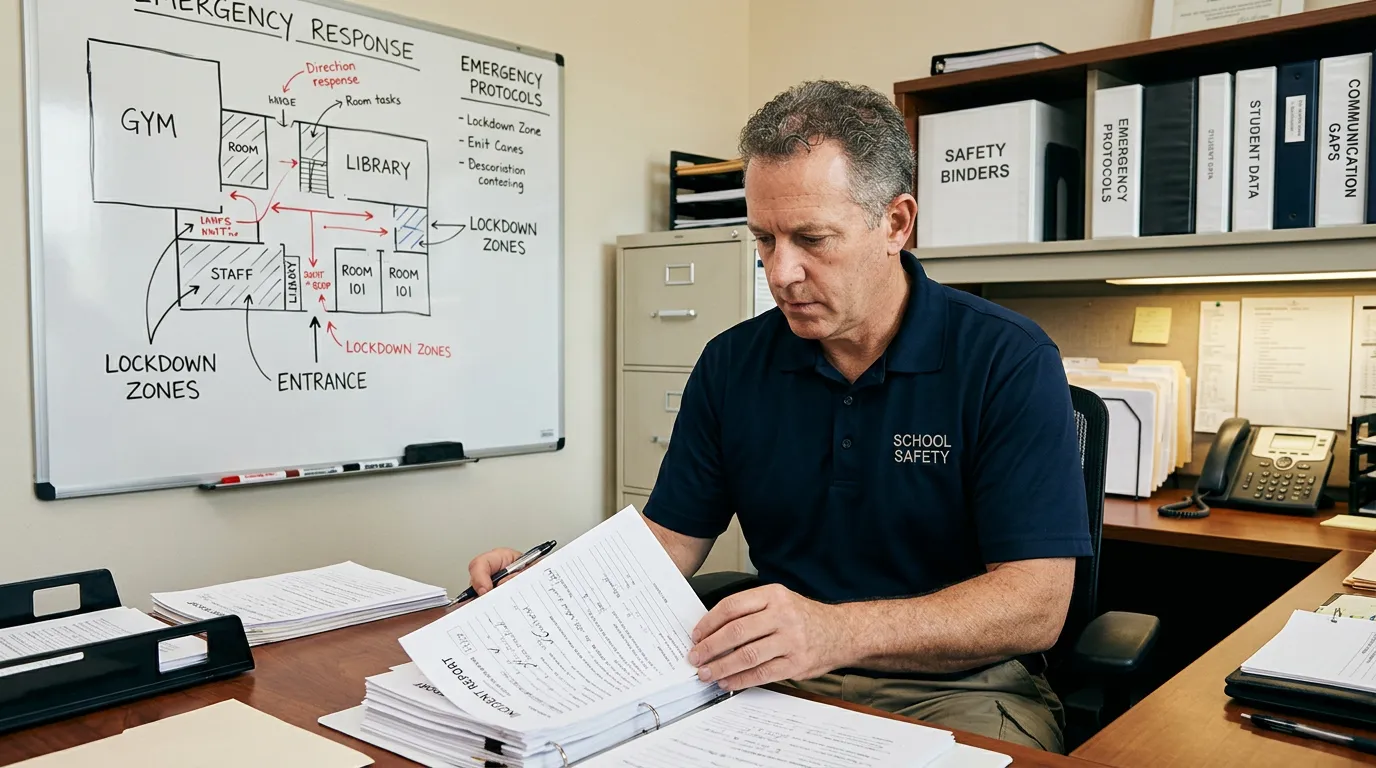
Closing the communication gaps between locked-down staff and arriving first responders requires a structured approach, not a single technology purchase.
Step 1 - Audit existing communication channels. Map every tool currently used during an emergency and identify where information stops flowing: teacher to admin, admin to dispatch, dispatch to responder. Most schools discover three or more dead ends.
Step 2 - Establish a two-way staff communication channel. Implement a dedicated, low-noise channel that allows teachers to report observations without breaking lockdown protocol. This is the highest-impact single change most schools can make, and it directly addresses the gap that Cherry Creek and Denver Public Schools both identified as their top priority.
Step 3 - Integrate direct-to-dispatch. Replace or supplement manual 911 calls with a system that pushes structured incident data directly to the dispatcher's screen, eliminating the call queue delay. RapidSOS-based integrations are the current standard for this capability in K-12 settings.
Step 4 - Give the incident commander a unified view. Consolidate campus maps, lock status, and camera feeds into a single dashboard so the administrator coordinating the response does not need to switch between tools during the first critical minutes.
Step 5 - Pre-share building data with local law enforcement. Ensure responding agencies have pre-loaded floor plans, entry point locations, and room numbering conventions before an incident occurs. Officers who have reviewed a building layout in advance can act on real-time staff observations immediately rather than orienting themselves first.
Frequently Asked Questions: First Responder Communication During School Lockdowns
How do teachers communicate with administrators during a school lockdown?
In most schools, teachers have no dedicated channel to reach administrators once a lockdown begins - they are isolated by design. Purpose-built systems address this with embedded two-way discussion threads that allow teachers to send silent, text-based observations to administrators and incident commanders without breaking noise discipline. Cherry Creek School District implemented QR-code-based secure communication specifically for this purpose (Campus Safety Magazine, 2024).
What information do first responders need when responding to a school emergency?
First responders need five categories of information on arrival: threat location, civilian locations, building layout, active lock status, and any staff with direct line-of-sight to the threat. Without pre-loaded building data and real-time staff input, officers must conduct a full sweep of an unfamiliar building, adding critical minutes to response time.
Can school staff talk to 911 during an active lockdown?
Staff can call 911, but doing so breaks noise discipline and creates risk. More importantly, a phone call to 911 enters a call queue and delivers only the information the caller can verbally communicate in the moment. Direct-to-dispatch integrations bypass this entirely, pushing structured incident data to the dispatcher's screen within seconds of alert activation without requiring a voice call.
What is two-way communication in a school emergency system?
Two-way communication in a school emergency system means staff can both receive alerts and send real-time observations back to administrators and, where integrated, to dispatchers. It is distinct from one-way PA or mass notification systems, which broadcast to all rooms but cannot receive information from individual classrooms. According to Guard911 (2024), effective two-way communication between every lockdown space and law enforcement is a baseline requirement for safe response.
Why does communication break down during school lockdowns?
Communication breaks down because lockdown protocol requires silence, and most schools have no channel designed to work within that constraint. Legacy PA systems are one-way. Personal phones create noise risk. Radios are not distributed to classroom teachers. The result is an information blackout at the floor level precisely when administrators and first responders need floor-level data most.
How does RapidSOS work for schools?
RapidSOS is a data platform that connects emergency software systems directly to 911 dispatch centers. When a school activates an alert through a RapidSOS-integrated system, structured incident data - school name, address, alert type, and real-time updates - is pushed directly to the dispatcher's screen without going through the standard 911 call queue. According to the NYC Mayor's Office (2025), this integration can put actionable information in front of a dispatcher within seconds of school-side activation.
What should schools do to improve first responder coordination?
Schools should audit their current communication chain for dead ends, implement a two-way staff communication channel that works within lockdown protocol, integrate direct-to-dispatch to eliminate call queue delays, consolidate building data into a single incident commander view, and pre-share floor plans with local law enforcement before an incident occurs. Denver Public Schools identified two-way communication as the single highest-impact change after debriefing real incidents (Denver7, 2024).
How do panic button apps communicate with first responders in real time?
Panic button apps that include direct-to-dispatch integration push structured incident data to the 911 dispatch center's screen the moment an alert is activated - bypassing the standard call flow. Apps without this integration rely on a staff member making a manual 911 call, which introduces call queue delays and depends on the caller's ability to communicate accurately under stress. The NYC school-to-911 integration demonstrated that the direct-push model can have a dispatcher broadcasting to responding units within seconds (NYC Mayor's Office, 2025).
The Bottom Line: Communication Is the Response
Physical security measures - locks, cameras, access control - create the conditions for a safe response. First responder communication during school lockdown determines whether that response is actually effective. The three gaps (teacher to admin, admin to dispatch, responder to staff) are each solvable with existing technology. The barrier is fragmented procurement, not technical impossibility.
Every school safety director who has debriefed a real lockdown has encountered these gaps. The districts making measurable progress - Denver Public Schools, Cherry Creek, New York City - share one common investment: structured two-way communication that keeps information flowing between locked-down staff and arriving first responders throughout the incident, not just at initiation.
Treating communication as infrastructure - with the same seriousness applied to door locks and cameras - is not a technology decision. It is a life-safety decision. The school lockdown communication gap is documented, understood, and solvable. The only question is whether the next incident will expose it again.
If you'd like to see how QuickSecure approaches this, we'd love to talk.
Sources
- Denver Public Schools adds new technology to improve communication during school crisis responses
Communication was the number one issue when debriefing after a critical incident. Two-way communication lets people locked in the building give first-hand knowledge of what is going on, making it easier to allocate resources.
- School Lockdown Drills: How to Reduce Fear and Trauma – Campus Safety Magazine
Cherry Creek district uses QR-code-based secure communication so that as first responders move into an incident, teachers can communicate two-way if they have imminent problems or things they have seen that need immediate attention.
- Best Practices for School Emergency Management – Raptor Technologies
Schools in crisis cannot afford even one second of delayed or inaccurate communication with 911 dispatchers and first responders. Successful response depends on how quickly first responders receive accurate, specific information about the emergency.
- Mayor Adams Announces First-in-Nation Technology to Integrate Public Schools With 911
The school-activated system bypasses the 911 call flow straight to real-time dispatch. Within seconds, the dispatcher puts the call over the air and the dashboard provides emergency responders pertinent information on the school.
- School Panic Alarms – Navigate360
Many schools still rely on a patchwork of disconnected tools — separate systems for visitor check-in, drills, alerts, and reunification — resulting in delayed responses, lost information, and increased risk.
- The Future of K-12 Safety: Unified Security Platforms – Arxys
Legacy school security often relied on siloed systems — independent cameras, separate door locks, and manual intercoms. These fragmented setups often fail due to poor data retention and a lack of interoperability during a crisis.
- Active Intruder Training Saves Lives – Guard911
Effective, simple, and accessible two-way communication between lockdown spaces, every classroom, school administrators, campus monitors, and law enforcement is not optional anymore.