Fragmented School Security Systems: How Siloed Tools Fail During Real Emergencies

Most K-12 schools have invested in the right individual tools: cameras, access control, panic alerts, visitor management. The problem isn't the tools. It's that fragmented school security systems - procured separately, running on separate dashboards, with no shared data layer - create failure modes that are most severe in the first 60 to 180 seconds of an active incident. This post maps exactly what breaks, and why.
The Hidden Danger in Your Security Stack
The average K-12 school operates with more than three active safety vendors simultaneously, creating a patchwork of dashboards, logins, and alert systems that must be manually reconciled during an emergency (Kokomo24/7). Schools consolidate an average of 3.4 vendors within the first three years of adopting a unified platform - meaning the baseline entry point is well above three active vendors per campus.
Vendor sprawl compounds over time because safety budgets are reactive. Each new incident type - active shooter, medical, weather - prompts a new point-solution purchase rather than a platform evaluation. According to Navigate360, schools pay redundant costs across fragmented stacks: separate hardware maintenance contracts, duplicate training subscriptions, multiple vendor support fees, and siloed reporting dashboards - none of which surface the cross-system visibility needed during an emergency.
Fragmentation is not primarily a cost problem. It is a life-safety problem.
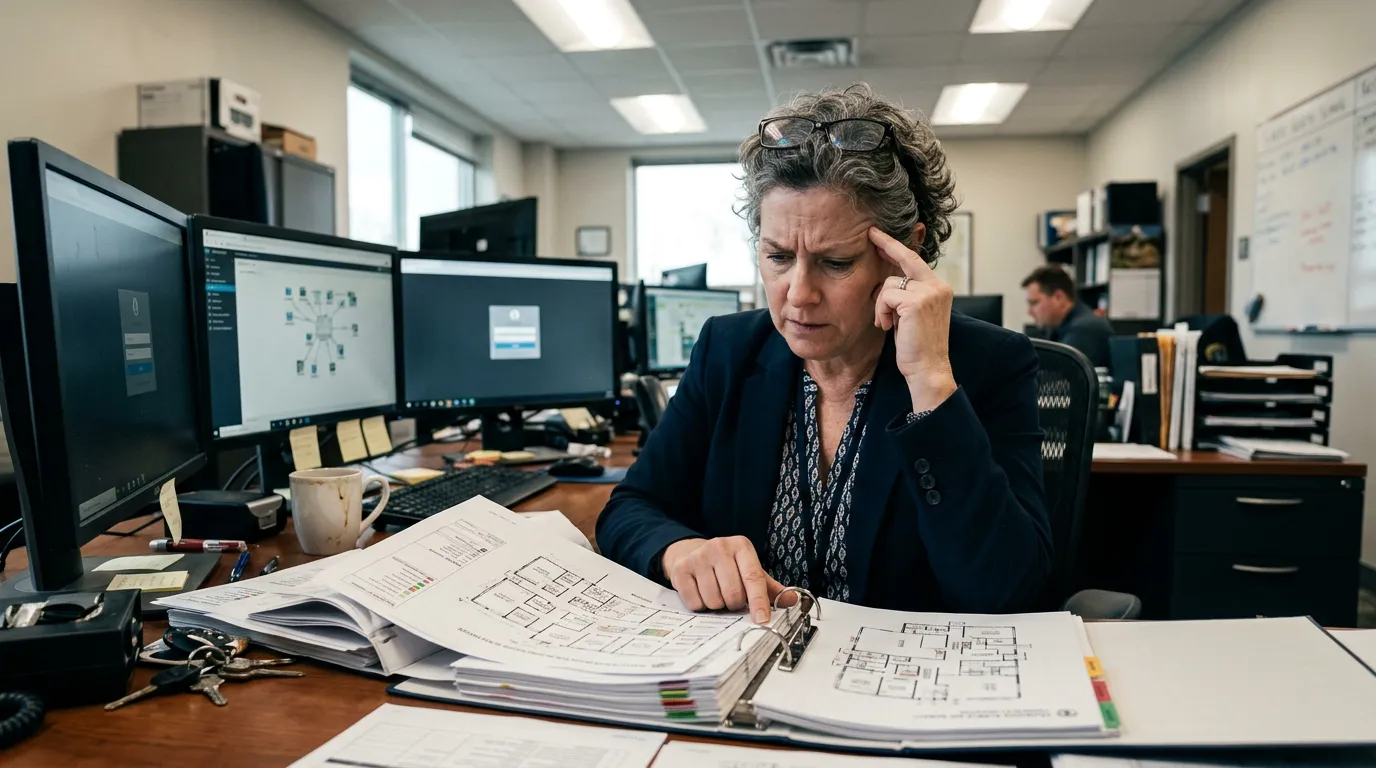
What Happens When a School's Cameras and Access Control Aren't Integrated?
When cameras and access control run on separate platforms, a Safety Director responding to a triggered door alarm must switch applications - or physical locations - to pull camera context. That introduces a 30 to 90 second verification delay in the first moments of an incident.
Without integration, there is no automatic correlation between a door-forced-open event and the nearest camera feed. Staff must manually identify which camera covers which door, often from memory or a printed map. In a lockdown scenario, confirming which doors are locked requires radio check-ins from individual teachers - a process that can take 5 to 10 minutes across a large campus and introduces human error. According to ANM, traditional security approaches built around isolated cameras and on-premises recorders simply cannot keep up with modern campus threats that require real-time, cross-system situational awareness.
The 60-Second Failure Cascade: What Actually Breaks During a Lockdown
Fragmented systems don't fail all at once. They fail in sequence, and each gap compounds the next.
Seconds 0-15: A threat is identified. In a fragmented system, the person who sees it must decide which tool to use - panic app, radio, intercom, or phone call - with no single trigger that initiates all downstream actions simultaneously.
Seconds 15-45: Lockdown alert is issued. Without integration, the alert system cannot automatically push door-lock commands to access control, surface live camera feeds to the administrator dashboard, or pre-populate dispatch with building context.
Seconds 45-90: First responders are contacted. According to Sentry Security, with a standard alarm system the communication chain runs: trigger, monitoring center verification call, 911 call, dispatcher data entry, responder dispatch - each handoff adds latency measured in minutes, not seconds.
Minutes 2-5: Accountability begins. Without SIS integration, staff conducting headcounts work from printed lists or memory, with results reported by radio and no central aggregation.
The cumulative effect is a measurable delay in first responder deployment and a degraded situational picture at exactly the moment when both matter most.
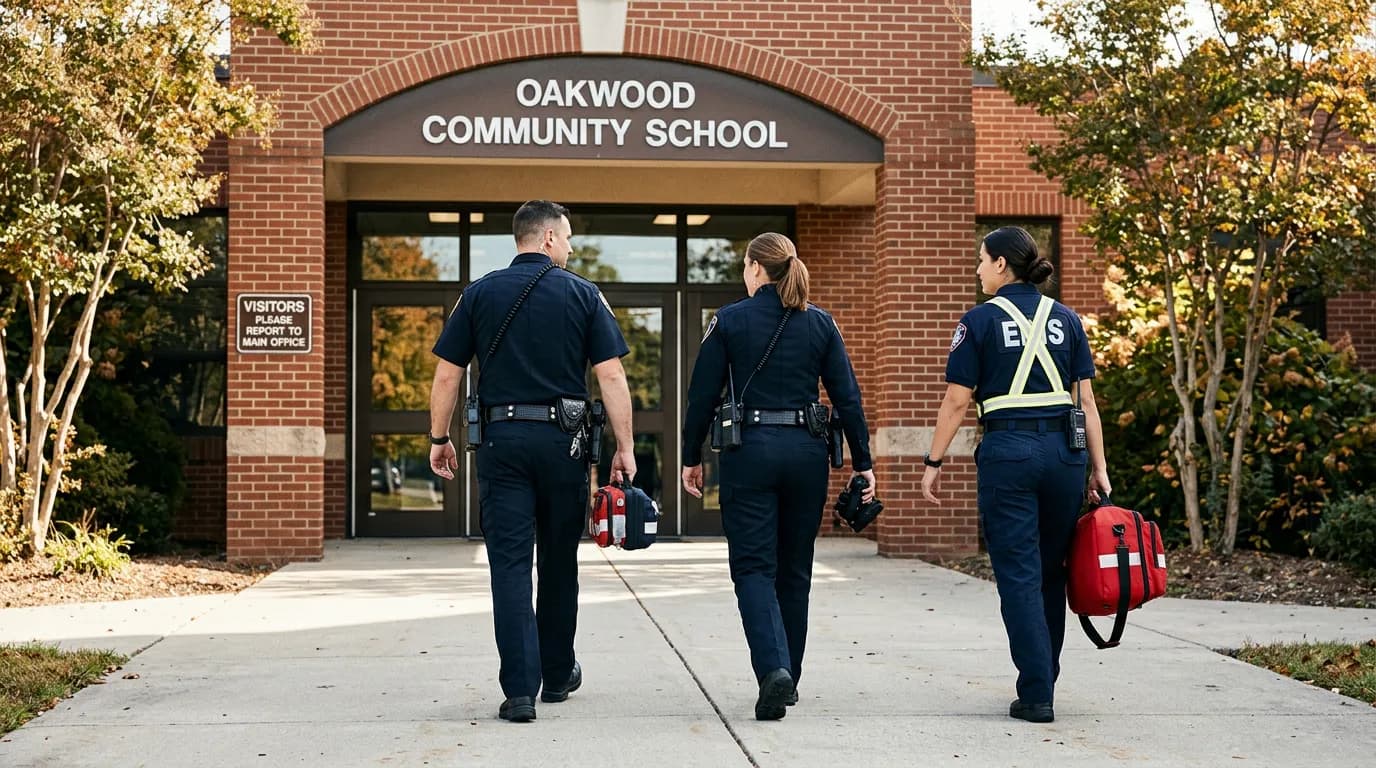
How Do Fragmented School Security Systems Affect First Responder Response Time?
Fragmented systems directly extend the time between a triggered alert and an informed responder on scene. According to Omni Data and RapidSOS, when dispatch is integrated with building data - floor plans, live camera feeds, door-access status - that information is available in the 911 center at the moment of the call, eliminating the manual relay chain entirely. Without it, first responders arriving on scene must conduct their own reconnaissance before they can act tactically.
Fragmented systems also impair inter-agency coordination. When police, fire, and EMS respond simultaneously, the absence of a shared digital picture forces each agency to build its own situational awareness from verbal radio updates. Every minute of delayed deployment in an active threat scenario has documented life-safety consequences.
Point Solutions vs. Unified Platforms: What the Difference Means Operationally
The operational difference between a point solution and a unified platform is not features - it is latency and human dependency.
| Dimension | Point Solutions | Unified Platform |
|---|---|---|
| Data layer | Siloed per vendor | Shared across all functions |
| Trigger response | Human bridges systems | Automated propagation |
| Staff training | Multiple interfaces under stress | Single workflow, any emergency |
| Dispatch | Via monitoring center call chain | Direct-to-911 with pre-populated context |
| Lock status visibility | Separate access control dashboard | Unified dashboard with live status |
| Accountability | Printed rosters, radio check-ins | SIS-connected live digital lists |
| Drill vs. real emergency | Different tools, different workflows | Same workflow, no training gap |
According to Ruvna, schools that have invested in all the right tools still find that managing a security concern feels like solving a puzzle where half the pieces are in different boxes - because the answer isn't wrong systems, it's too many of them. The school safety marketplace evolved from vendors each starting with one strong core service, creating a patchwork that was never designed - it accumulated (School Security).
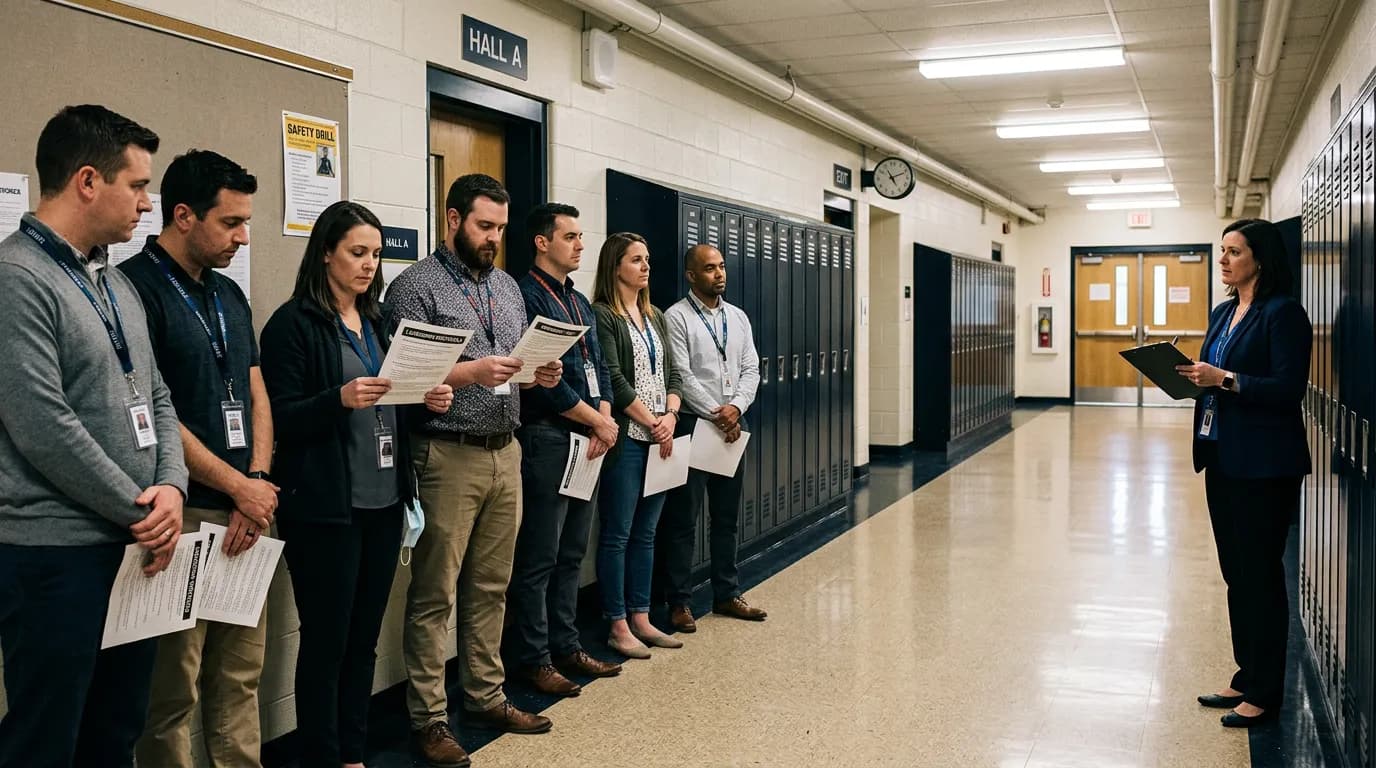
Why Drills Don't Expose Fragmentation - Until a Real Emergency Does
Lockdown drills are designed to test human procedure, not system integration. More than 98% of K-12 schools conduct lockdown drills (Rockefeller Institute of Government), but drill execution typically involves a single system - the alert tool - while other systems remain passive. The cross-system failure modes are never stress-tested.
Drills conducted in fragmented environments rely on the same informal workarounds staff use daily: radio check-ins, phone calls, printed maps. The drill validates the workaround, not the system. A real emergency removes the cognitive bandwidth that makes workarounds function. Staff who successfully navigate a drill by switching between three applications will not perform that navigation reliably under acute stress.
The Safety Director's Fragmentation Checklist
Five indicators your stack has dangerous gaps:
- Multiple dashboards - If your team needs more than one login to see camera status, door lock status, and active alerts simultaneously, you have response latency built into your critical path.
- Manual dispatch - If your emergency workflow requires a staff member to call 911 or a monitoring center, you have added a human handoff to the chain.
- Printed accountability tools - If headcount during an evacuation relies on printed rosters, your accountability data is stale the moment it's printed.
- Radio-only lock confirmation - If confirming all classroom doors are locked requires radio check-ins, your lockdown verification takes minutes instead of seconds.
- Separate drill and emergency tools - If the application used during a drill differs from what staff would use in a real emergency, your drill is not building the muscle memory that matters.

Frequently Asked Questions: Fragmented School Security Systems
Why do school emergency response systems fail during real incidents?
Most school emergency systems fail during real incidents because individual tools - cameras, access control, panic alerts, dispatch - don't share a common data layer, forcing humans to bridge systems manually at the exact moment cognitive load is highest.
What happens when a school's cameras and access control aren't integrated?
Without integration, a door-forced-open alert does not automatically surface the nearest camera feed. Staff must manually identify camera coverage from memory or a printed map, introducing a 30 to 90 second verification delay in the first moments of an incident.
How many security vendors does the average K-12 school use?
Schools consolidate an average of 3.4 vendors within the first three years of adopting a unified platform, indicating the typical starting point is well above three active safety vendors per campus (Kokomo24/7).
What is the risk of having separate school safety tools that don't communicate?
Siloed tools create blind spots where an event in one system - a panic button trigger, a forced door, a fire alarm - is invisible to every other system, preventing automated response and requiring manual coordination under stress.
How do fragmented school security systems affect first responder response time?
Fragmented systems add multiple human handoffs between a triggered alert and an informed responder: monitoring center verification, 911 call, manual dispatcher data entry. According to Sentry Security, each handoff adds latency measured in minutes before responders have building context.
What should a unified school safety platform include?
At minimum: a shared data layer across emergency alerting, access control, camera feeds, and dispatch; direct-to-911 dispatch with pre-populated building context; SIS-connected live accountability tools; and software-connected door lock status visible from a single dashboard.
How does disconnected school safety technology create blind spots during lockdowns?
A blind spot occurs when an event in one system is invisible to every other system. Common examples: a panic button that doesn't automatically lock doors, or a door-forced-open alert that doesn't pull the nearest camera feed - leaving staff without automated or informed response.
What is the difference between a school safety platform and point solutions?
A point solution solves one defined problem with no native awareness of adjacent systems. A unified platform shares a common data layer so a single trigger event - a panic button press - simultaneously locks doors, notifies staff, surfaces camera feeds, and initiates dispatch without human relay.
If you'd like to see how QuickSecure approaches unified school safety, we'd love to talk.
Sources
- The Shift From Specialized School Safety Tools to All-In-One Platforms — School Security
In the school safety marketplace, many security product and technology vendors begin with one strong core service — panic alert, visitor management, or emergency software — creating a patchwork of tools that don't connect.
- Vendor Consolidation Calculator: The True Cost of Your Current Safety Stack — Navigate360
Schools pay more than they realize for disconnected safety tools — financially and operationally — with redundant hardware maintenance contracts, separate reporting dashboards, duplicate training subscriptions, and multiple vendor support fees.
- How RapidSOS Integration Improves Emergency Response — Omni Data
Without integrated data during a lockdown, dispatchers must rely on verbal updates while coordinating multiple agencies — with RapidSOS integration, floor plans, live camera views, and door-access status are available in the 911 center.
- What Is RapidSOS? How It Works — Sentry Security
With a standard alarm system, a monitoring center calls to verify, then calls 911, then a dispatcher manually types info — by the time a first responder has your building type and context, several minutes have already passed.
- From Fragmented to Unified: The Independent School Safety Revolution — Ruvna
Schools have invested in all the right tools and vendors, yet managing a simple security concern still feels like solving a puzzle where half the pieces are in different boxes — because the answer isn't wrong systems, it's too many of them.
- Creating a Safer Learning Environment with Cloud-Based School Security Platforms — ANM
Many school districts still operate with fragmented systems — traditional security approaches built around isolated cameras, on-premises recorders, and disconnected access systems simply cannot keep up with modern campus threats.
- School Lockdown Drill Dashboard — Rockefeller Institute of Government
While more than 98% of K-12 schools conduct lockdown drills, there is significant variability in state requirements — and drills can reveal deficiencies that exist in either procedure or personnel.
- Kokomo24/7 — K-12 School Safety and Security Software
Schools consolidate an average of 3.4 vendors within the first three years of using Kokomo24/7, suggesting the average school is entering with well over 3 active safety vendors creating fragmented operations.